
The Many Layers of Merfez: A Concept Between Identity, Design, and Modern Digital Culture

Merfez is one of those rare contemporary terms that refuses to stay in a single box. It does not belong neatly to one industry, one geography, or even one definition. Instead, it moves fluidly across design discussions, digital innovation spaces, lifestyle branding conversations, and cultural interpretations. What makes Merfez particularly interesting is not just what it is said to be, but how differently people understand it depending on the context in which they encounter it. In some circles it appears as a design identity associated with handcrafted aesthetics and interior styling, while in others it emerges as a conceptual framework used to describe interconnected systems or modern digital thinking. This layered ambiguity is precisely what has allowed Merfez to evolve into something more symbolic than literal, becoming a reflection of how modern ideas form, shift, and spread in an interconnected world.
To understand Merfez properly, it is important to step away from the expectation that it has a single origin story or a fixed definition. Instead, it behaves like a living idea—something shaped continuously by interpretation, usage, and creative reinvention. In a digital era where words can gain meaning through repetition across platforms rather than formal definition, Merfez stands as an example of how language itself is becoming more fluid. It is not just a name or label; it is a container into which different meanings are placed, depending on the intent of the user or creator engaging with it.
The Conceptual Emergence of Merfez in Modern Interpretation
The emergence of Merfez as a recognizable term seems closely tied to the rise of digital branding culture, where abstract and distinctive names are often used to represent ideas that are intentionally open-ended. In such environments, a word like Merfez does not need a strict historical lineage to gain relevance. Instead, it gains value through its adaptability. It can be associated with creative industries, lifestyle products, or even technological frameworks because it does not lock itself into a single identity.
Over time, Merfez began appearing in discussions that revolved around aesthetics, craftsmanship, and design thinking. In these contexts, it is often linked with the idea of handmade expression—objects that carry a sense of human touch, imperfection, and individuality. Rather than mass production or standardized visuals, Merfez is associated with materials and forms that feel intentional and curated. This interpretation positions it within a broader cultural shift toward authenticity, where consumers and creators increasingly value uniqueness over uniformity.
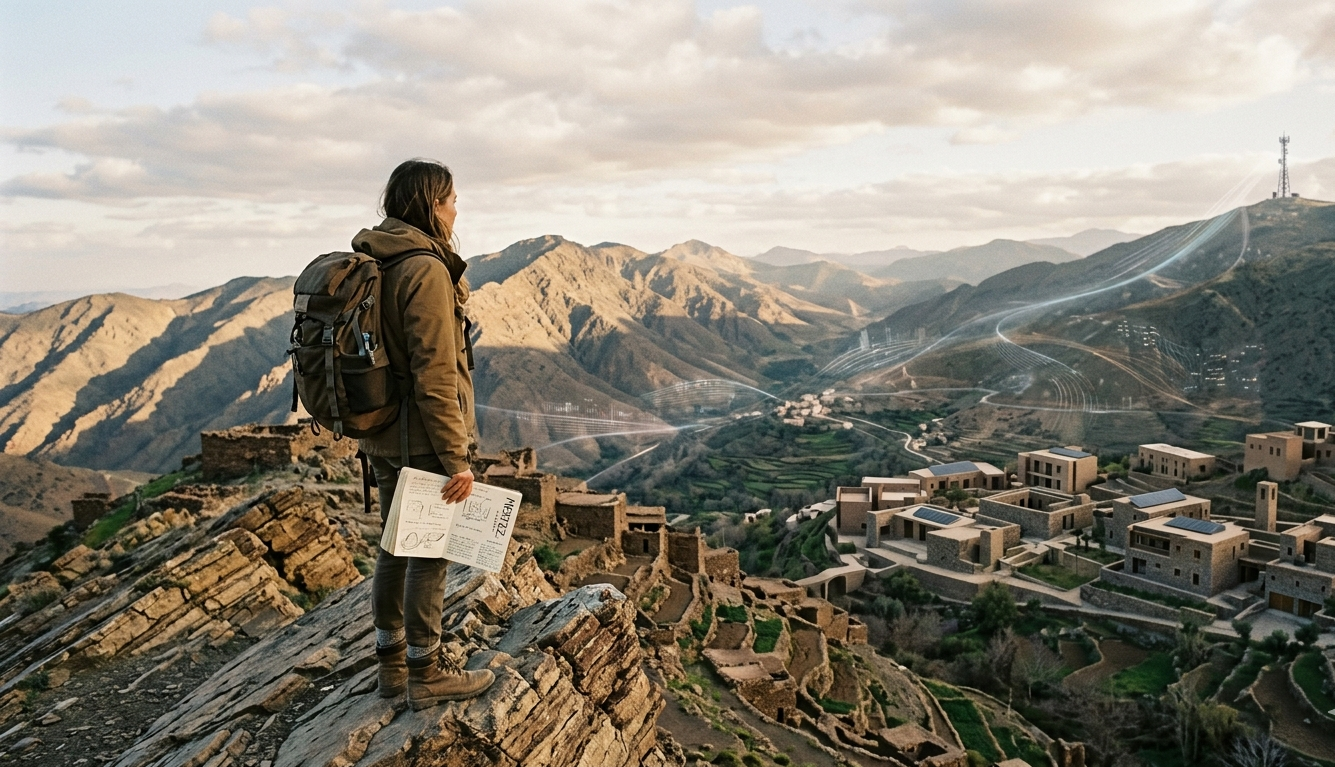
At the same time, another interpretation of Merfez developed in parallel, particularly in digital spaces where systems thinking and conceptual frameworks dominate discussions. Here, Merfez is described less as a physical or visual identity and more as a structural idea—a way of connecting processes, tools, or workflows into a unified system. This dual identity, where Merfez can represent both tangible aesthetic expression and abstract digital architecture, is part of what makes it so compelling as a modern concept.
Merfez and the Language of Design Identity
In the world of design and lifestyle aesthetics, Merfez is often positioned as a symbol of warmth, texture, and emotional presence. It is associated with handcrafted objects, natural materials, and interior environments that prioritize comfort and storytelling. Rather than focusing on minimalism alone or excessive ornamentation, the Merfez-inspired approach tends to sit somewhere in between, emphasizing balance and human connection.
What distinguishes this design interpretation is its emphasis on narrative. Objects are not seen as isolated pieces of decoration but as part of a larger story about space, memory, and identity. A woven fabric, a textured rug, or a carefully shaped decorative item becomes more than an object—it becomes a representation of cultural influence and personal expression. In this sense, Merfez aligns with the growing appreciation for artisan-driven work, where the value of an item is tied not just to its appearance but to the intention behind its creation.
This interpretation also reflects a broader global movement away from purely industrial aesthetics. As modern environments become increasingly digital and fast-paced, there is a parallel desire for physical spaces that feel grounding and personal. Merfez, in this context, symbolizes that return to tactile experience and emotional design. It becomes a way of reintroducing humanity into environments that might otherwise feel overly structured or impersonal.
The Digital Dimension of Merfez as a Systemic Idea
Beyond design, Merfez also finds relevance in discussions about digital systems and organizational frameworks. In this interpretation, it is used as a conceptual model for connectivity—describing how different components of a system interact with one another in a fluid and adaptive way. Instead of rigid hierarchies or linear processes, Merfez-like systems are understood as interconnected networks where each element influences and responds to others dynamically.
This perspective aligns with modern approaches to technology, where flexibility and integration are more valuable than static structures. Whether in software development, workflow design, or data organization, the idea of interconnected adaptability has become increasingly important. Merfez, in this sense, serves as a symbolic representation of this shift. It is not a specific tool or platform, but rather a way of thinking about how systems can evolve organically rather than being fixed from the outset.
One of the most interesting aspects of this digital interpretation is its emphasis on fluid boundaries. In traditional systems, components often operate within clearly defined limits. In contrast, a Merfez-like framework suggests that boundaries can be porous, allowing information and function to move more freely between parts. This creates environments that are more responsive and capable of evolving with changing needs.
Cultural Symbolism and the Emotional Dimension of Merfez
Beyond its practical or conceptual uses, Merfez has also developed a symbolic layer that reflects broader cultural attitudes. It often represents the idea of hybridity—the blending of physical and digital, traditional and modern, structured and organic. In a world where identities and systems are increasingly layered and interconnected, Merfez becomes a metaphor for complexity that is not chaotic but harmonized.
There is also an emotional dimension to the way Merfez is discussed. It is frequently associated with comfort, authenticity, and intentional living. Even when used in abstract contexts, it tends to carry a tone of warmth rather than rigidity. This emotional quality may be one reason why it has found resonance across different creative and digital communities. It allows people to project meaning onto it in ways that feel personal and expressive.
At a deeper level, Merfez reflects how modern culture often constructs meaning collaboratively. Instead of definitions being assigned from a single authoritative source, they emerge through shared usage and interpretation. In this way, Merfez becomes less of a fixed object and more of a cultural conversation—an evolving idea shaped by the people who engage with it.
Modern Relevance and Evolving Perception of Merfez
In today’s fast-moving digital and creative environments, concepts like Merfez gain importance not because they are rigidly defined, but because they are flexible enough to adapt. The modern world values adaptability, and Merfez embodies that principle. It can exist within branding discussions, design philosophy, system architecture thinking, or even cultural analysis without losing its core identity as an open-ended idea.
This adaptability also explains why Merfez continues to appear in different contexts. It is not limited by industry boundaries, which allows it to travel across disciplines. Designers may use it to describe aesthetic direction, technologists may use it to represent system structure, and cultural commentators may use it to describe evolving identity patterns. Each interpretation adds another layer rather than replacing the previous one.
As global communication continues to evolve, such multi-dimensional terms are becoming more common. Language is no longer purely descriptive; it is also interpretive and experiential. Merfez fits naturally into this linguistic shift because it does not resist reinterpretation. Instead, it absorbs it.
The Future of Merfez as a Living Concept
Looking forward, the evolution of Merfez will likely depend on continued creative and conceptual use rather than formal definition. It may become more strongly associated with specific industries over time, or it may remain intentionally broad, serving as a flexible label for ideas that do not fit neatly elsewhere. In either case, its value lies in its openness.
What makes Merfez particularly significant is that it demonstrates how modern meaning is constructed. Instead of being anchored solely in history or authority, it is shaped by usage, context, and collective imagination. This positions Merfez not just as a term, but as an example of how contemporary culture builds and reshapes language in real time.
As creative industries and digital ecosystems continue to expand, concepts like Merfez will likely become even more common. They provide a linguistic space where complexity can exist without needing simplification. In that sense, Merfez is less about defining something concrete and more about allowing multiple truths to coexist within a single conceptual frame.
Conclusion
Ultimately, Merfez can be understood as a mirror of modern thinking itself—fluid, interconnected, and interpretive. Whether seen through the lens of design, digital systems, or cultural symbolism, it consistently points toward the same underlying idea: meaning is no longer fixed, but continuously shaped by interaction and perspective.
Rather than trying to confine Merfez to a single definition, it is more useful to understand it as an evolving concept that reflects how people create, communicate, and connect in the contemporary world. Its strength lies not in what it definitively is, but in what it allows others to imagine it to be.
